
Animal welfare programme
Stray dog feeding
Community dogs live alongside us, yet a dependable meal and clean water can be the hardest things for them to find. Our feeding work aims to be regular, respectful of neighbourhoods and useful beyond the meal itself.
01
Why regular feeding matters
Hunger shapes almost everything about a street dog's life. An undernourished dog recovers slowly from illness, is more likely to be involved in conflict over scraps, and is far harder to approach when medical care is needed.
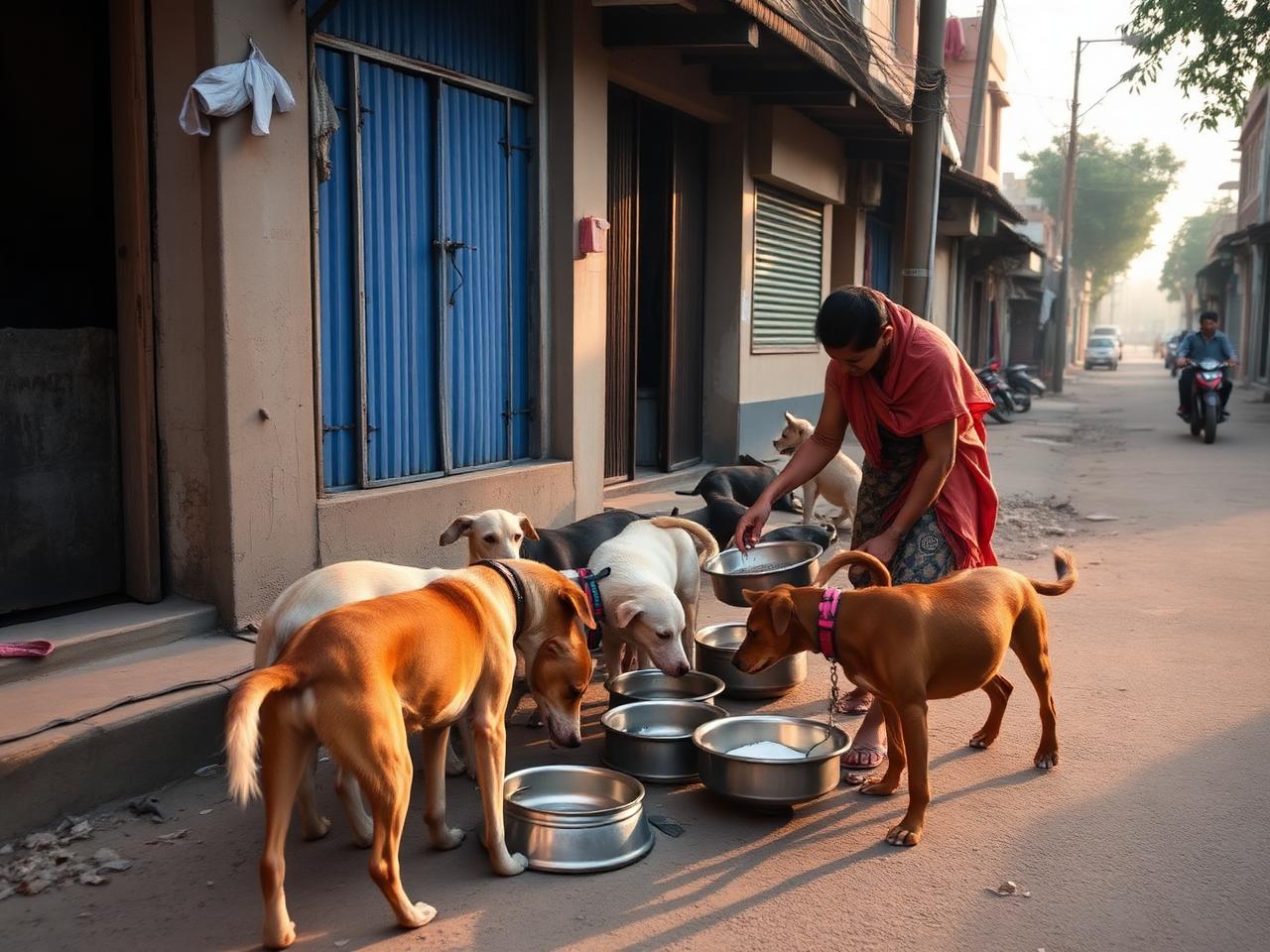
Feeding is not only about food. A predictable feeding point allows the same dogs to be seen week after week, so an injury, a skin condition or a pregnancy can be noticed early and acted upon.
Caption and photo credit are editable content fields.
02
What the programme does
We work with volunteers and residents to support feeding at locations where community dogs already gather, keeping the routine steady rather than occasional.
- Suitable, plain food appropriate for dogs — no spiced, salted or spoiled leftovers
- Clean drinking water, which matters especially through summer months
- Feeding points chosen away from traffic, gates, shopfronts and children's play areas
- Clearing of bowls and leftovers so that feeding never becomes a sanitation issue
- Simple notes on the dogs seen, so that health concerns can be followed up
Caption and photo credit are editable content fields.
03
How the activity is carried out
Volunteers agree on a time and a route, prepare food hygienically and feed calmly without crowding the animals. Where residents have concerns, we speak with them first and adjust the location rather than creating friction.
Coverage depends on volunteers, funding and community cooperation in each area, so we describe our routes honestly rather than promising daily presence everywhere.
Caption and photo credit are editable content fields.

Care and safety considerations
Volunteers are asked not to handle unfamiliar or unwell dogs, to avoid feeding in a way that causes crowding or traffic risk, and to report injuries to the coordination team instead of attempting treatment. Any medical concern is referred to qualified veterinary professionals.
From the field
Photographs from this programme
Images are added only when they are supplied by the organisation and cleared for publication.

Ways to help
How you can help
Sponsor a feeding route
Support the food, water and transport costs of a regular route in your area.
Join as a feeding volunteer
Give a fixed slot each week; training and a buddy system are provided before you begin.
Offer a safe feeding spot
Resident welfare associations can help identify locations that work for both people and animals.
Questions
Frequently asked questions
Do you feed dogs every day in every area?
No. Coverage depends on volunteers and resources in each locality. We would rather commit to a few dependable routes than claim citywide daily feeding.
Is street feeding a nuisance for residents?
Handled poorly, it can be. We choose safe spots, keep quantities sensible and clean up afterwards, and we speak with residents when concerns are raised.
Can I feed dogs in my own neighbourhood?
Yes. Keep the food plain, use a fixed corner away from gates and traffic, provide water and always clear the area afterwards.
Animal welfare
Stray cow feeding
Fodder and water support for stray and abandoned cows, distributed in ways that keep both animals and roads safe.
Animal welfare
Dog sterilisation drives
Humane population management carried out with qualified veterinary professionals, with proper pre-operative and post-operative care.
Animal welfare
Abandoned dog rescue
Assessment, safe handling, veterinary evaluation and recovery support for abandoned, injured or unwell dogs, with responsible rehabilitation where possible.
Animal welfare
Dog deworming & vaccination
Preventive care delivered under veterinary guidance — assessment, suitable schedules, records and follow-up for community dogs.
Get involved
Be part of a more compassionate India
Whether you give an hour a week, a skill, a partnership or a contribution, there is a way to help care reach further.